
Board-up and roof tarping
Board-up and roof tarping in Miami, 24 hours a day: we close the windows, doors, walls and roofs that a fire, a storm or a break-in has left open.
When to call
- Windows or doors broken by a fire, or by the crews who fought it
- A roof burned through, or cut open by firefighters
- A storm that tore off roof covering or blew in windows and doors
- A break-in, or a vehicle driven through a wall or storefront
- You manage a building with a unit or common area left open
- Openings to cover before a forecast hurricane
Before the boarding: safety and the reports to make
After a fire, nobody goes back into the building until the fire department that fought it says it is safe to enter. FEMA’s Ready.gov tells you to check with the fire department first and not to reconnect the utilities yourself. Which department that is depends on the address: the City of Miami has its own Department of Fire-Rescue, and Miami-Dade Fire Rescue covers unincorporated Miami-Dade and 29 municipalities.
After a storm, the City of Miami’s guidance on returning home is to walk around the outside first, checking for loose power lines, gas leaks and structural damage, and to leave at once if the building looks as if it may collapse. If you smell gas or hear a hissing or blowing sound, the same guidance says to open a window and leave at once, to turn off the main gas valve from outside if you can, and to call the gas company from a neighbor’s home; once the gas is shut off at the main valve, it says, a professional has to turn it back on. Miami-Dade County’s after-the-hurricane page warns of downed power lines, broken glass and unstable trees, and says a downed line is reported to FPL, not to 911.
After a break-in, report it to the police before the openings are covered: inside the City of Miami, to the City of Miami Police Department; elsewhere, to the Miami-Dade Sheriff’s Office or the city’s own police.
Board-up after a fire
Boarding waits for the fire department’s word, above. If the cause of the fire is still being looked into, ask the officer in charge whether the investigators need the building left as it is before anything is covered. In the City of Miami, fire investigations are part of the work of the Department of Fire-Rescue’s Fire Prevention Bureau.
Our board up services after a fire close every opening the fire left and every one the firefighters made: windows and glass doors that broke in the heat, doors that burned or were forced, holes in the outside walls, and the parts of the roof that burned or were cut open. A building left open takes in the next rain and invites anyone who wants to get in. Board-up crews usually cover the openings with plywood fixed over the frame, and brace the large or weakened ones. NIOSH, in its guidance for workers cleaning up after wildfires, warns that a fire-damaged structure may not be safe or stable even where the damage is not noticeable, with a risk of serious injuries from falls or from being struck by collapsing materials. Boarding a fire-damaged building is not a job for the owner. Where the roof is open, the opening is tarped, as described below.
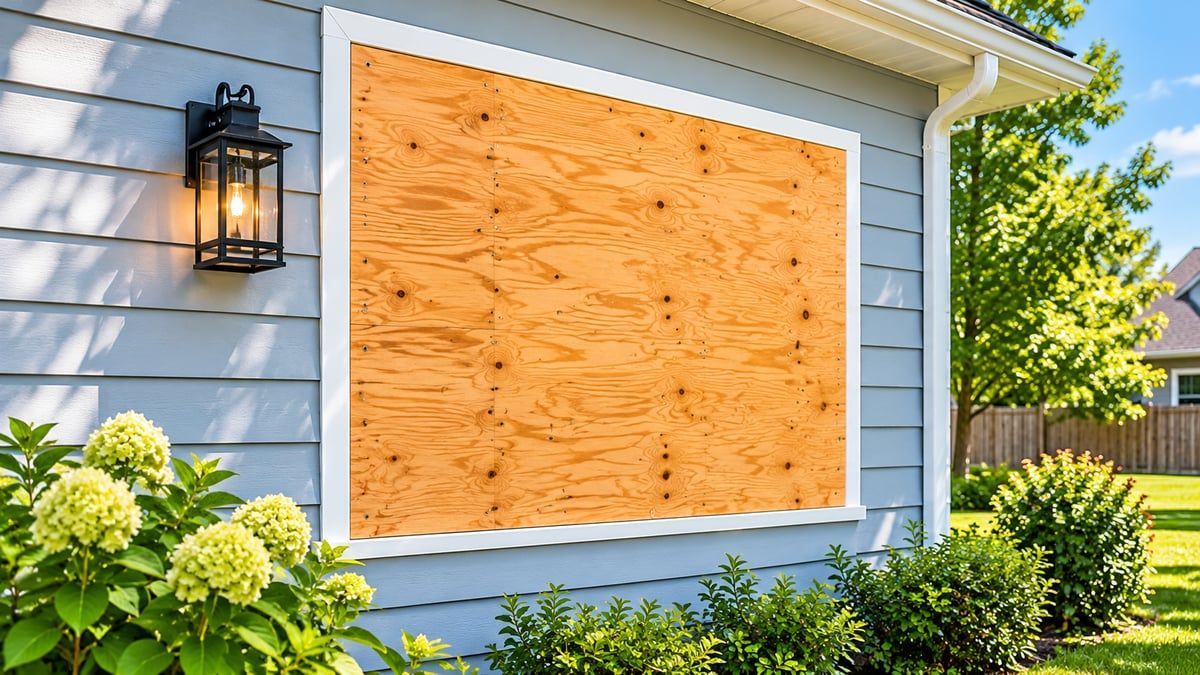
Boarding is the first part of fire damage restoration in Miami, not the last. The cleanup that follows a board-up takes out the debris and the water used on the fire, dries the building, and deals with the soot and the smell of smoke. We board up 24 hours a day, every day.
Board-up after a hurricane or storm
We board up after storms as well as fires: windows and sliding glass doors blown in, doors torn from their frames, walls opened by a falling tree, and roofs that lost their covering. The National Hurricane Center gives the Atlantic hurricane season as June 1 to November 30, with most activity between mid-August and mid-October. A building boarded or tarped in those months may face another storm before it is repaired, so the boards and the tarp stay on until the repair, not until the weather clears. We also board up ahead of a forecast storm, before any damage is done.
After a declared emergency for a hurricane or tropical storm affecting Miami, the City of Miami’s Building Department activates its post-storm permitting plan. The plan lists temporary tarping of roofs or walls to prevent further damage among the common post-storm jobs that typically do not need a permit. It says the list is not complete, and tells anyone unsure whether a job needs a permit to consult the Building Department.
Board-up after a break-in or a vehicle impact
After a break-in we board the broken glass, the forced door or the smashed storefront. Where a vehicle has gone through a wall, the opening is closed and, if the wall is damaged, braced until it is repaired. The police report comes first, as above. If you rent, the owner or the property manager should hear about the damage before anything is fixed; in a condo, so should the association or the building manager. The insurance claim and the building’s own rules are separate matters to raise with the insurer and the association.
Roof tarping after a fire or a storm
A tarp keeps the rain out of a roof that burned through, lost its covering in the wind or was holed by a falling limb. It does not repair the roof under it. On a tile or a metal roof the crew takes care not to add to the damage: tiles crack underfoot, and every fastener driven through a tile or a metal panel is one more hole for the roofer to close.
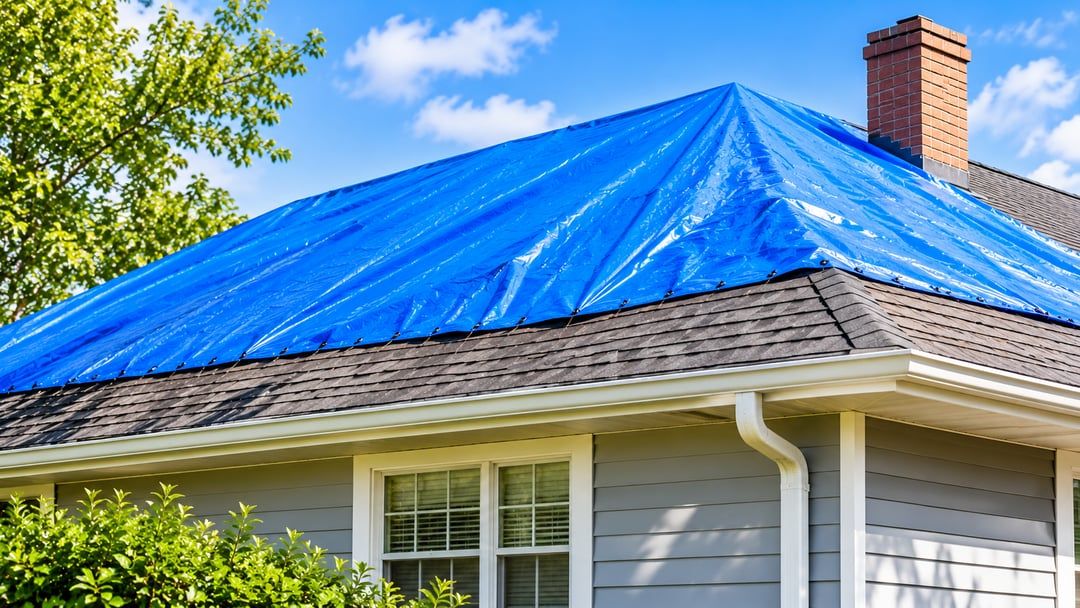
After a fire, part of the hole in the roof may be the firefighters’ own. Miami-Dade Fire Rescue’s booklet After the Fire explains that firefighters break windows and cut holes in a roof, which it calls ventilation, to slow the damaging outward movement of the fire and to help remove the blinding smoke. Those openings are tarped and boarded like the ones the fire made.
How long can a board-up stay up, and what comes next?
After damage, a board-up stays up until the repair begins. It keeps the weather and intruders out; it fixes nothing, so the windows, doors, walls and roof behind it are put right by the repair work that follows, described in our section on permanent repairs after a fire.
Whether boarding after a fire needs a permit is a question for the building department of the address: the City of Miami’s inside the City, and Miami-Dade County’s in unincorporated Miami-Dade. The county’s permit information says that a municipality with its own Building Official handles permits within its limits. Inside the City of Miami after a declared storm, the City’s post-storm plan above applies.
Before the openings are covered, photograph them. FEMA’s hurricane guidance tells owners to document any property damage with photographs, and the City of Miami’s guidance on returning home says to take pictures of the damage.
A manager with an open unit or common area in an apartment or condo building can call us directly. What a fire job costs in Miami is set out on our home page.
How the job goes
-
Step 1: What is open
Every opening in the walls and the roof is found, the ones out of sight included, before any covering goes up.
-
Step 2: Bracing what is weak
Openings too large or too weak to hold a cover on their own, such as a storefront or a wall a vehicle went through, are braced as well as covered.
-
Step 3: Closing the walls
The window, door and wall openings are closed, so the building is shut again to the weather and to entry.
-
Step 4: Covering the roof
Any open part of the roof is covered with a tarp that sheds the rain until the roofing work begins.
-
Step 5: Handing over
When the repair starts, the boards and the tarp come off and the openings are closed for good.
Questions
What is an emergency board-up?
It is boarding that cannot wait for the repair: the windows, doors, wall openings and roof sections that a fire, a storm or a break-in has left open are covered, so that the building is closed to rain and to entry while the repair is arranged.
Do you board up at night and on weekends?
Yes. Our line is open 24 hours a day, every day of the week, and board-up is work we take at any hour, weekends and holidays included.
What does board-up cost?
It depends on how many openings there are, how large they are, and whether the roof needs a tarp as well.
Do you board up businesses and storefronts?
Yes. We board up shops, restaurants, offices and warehouses as well as homes, and units and common areas of apartment and condo buildings left open by a fire, a storm or a break-in.
Had a fire? Call us.
Tell us what happened and where the building is. We will tell you on the call what happens next.
Open 24 hours, every day